Sunday, April 10, 2016

Artifact dating?

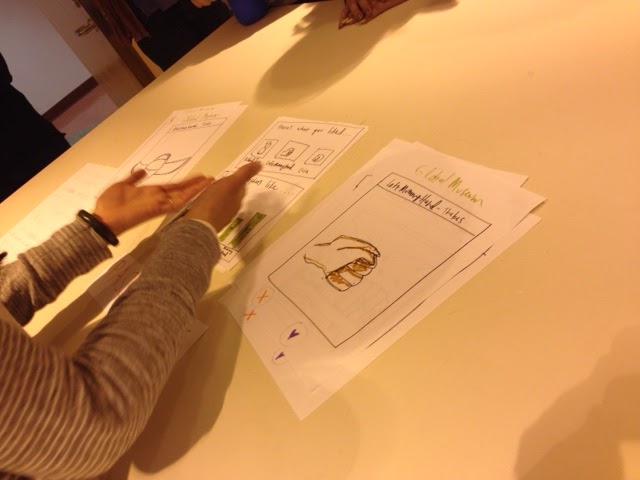
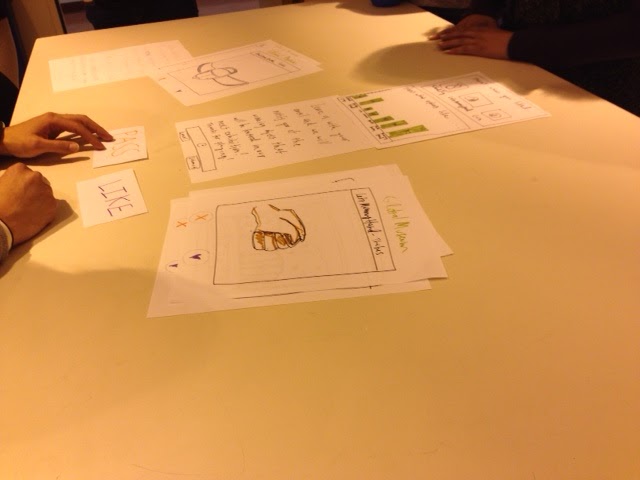
Inspired by the Tinder interface, this digital interactive would allow visitors to browse artifacts, indicating "like" or "pass," then see their preferences ranked in the context of other visitors. Top rating artifacts could be included in upcoming exhibitions.


Saturday, April 9, 2016

The 100 Year Journey of Nesp-Per-N-Nub

This interactive combined learning and participation in a process that charted the journey of the Global Museum's mummy. Visitors would answer questions about Egyptian culture and mummies and if correct, could proceed to the text frame in the narrative of the mummy's journey.


Welcome to the Global Museum. You are here.

In another map interactive, visitors are encouraged to share where they came from. Pins are placed on important places along the journey and connected with string. The tumbtack provides opportunities for multiple visitors to "share" the same origin by looping another string to it.


Testing Prototypes for Audience Interactives

Students brought their prototypes of audience interactives for the Global Museum to test with their colleagues and guest tester Melissa Standen.

How did you get here?
In this interactive, visitors can trace their journeys to the Global Museum and that of objects to the museum. Visitors are encouraged to trace their own journey by pinning a place of origin, plotting their journey and then stringing your path. Staff at the Global Museum could do the same for objects in the collection.


Friday, April 8, 2016

The social work of museums

What issues in the community might the Global Museum address? This was the question in one discussion inspired by readings about the increasingly social work of museums around the world.


Students discussed the critical path issue of getting people into the museum, but then explored how the museum might showcase how it obtained artifacts (why do we have it? issues of academic privilege). How might the museum provide a space for dialogue about tolerance and provide students with an important voice? And how might the museum address campus and regional issues related to sexual violence and gentrification. Transparency was emphasized, as a way for the museum to showcase its value to the campus community.

Sunday, February 28, 2016

Designing the Global Museum for Museum Studies Grad Students

One team created the following POV/Experience Statement:

A goal-oriented but frazzled museum studies graduate student needs a way to feel accomplished and refreshed because they need a community on campus.

Their response was a prototype of a "luxury 503" with key-card access, with lockers, opportunities for ownership, and a kitchen:

The next team developed the following POV/Experience Statement:

Monica Samantha is a public programs intern that plans be an education curator who needs a well-rounded hands-on education to gain the experience necessary to have ownership of their professional career.

In response the team prototyped an education lab/maker space where students could test interactives.

Friday, February 26, 2016

Design Thinking!

Students responded to the design challenge: How might the Global Museum at SFSU provide a meaningful resource to SFSU Museum Studies graduate students.